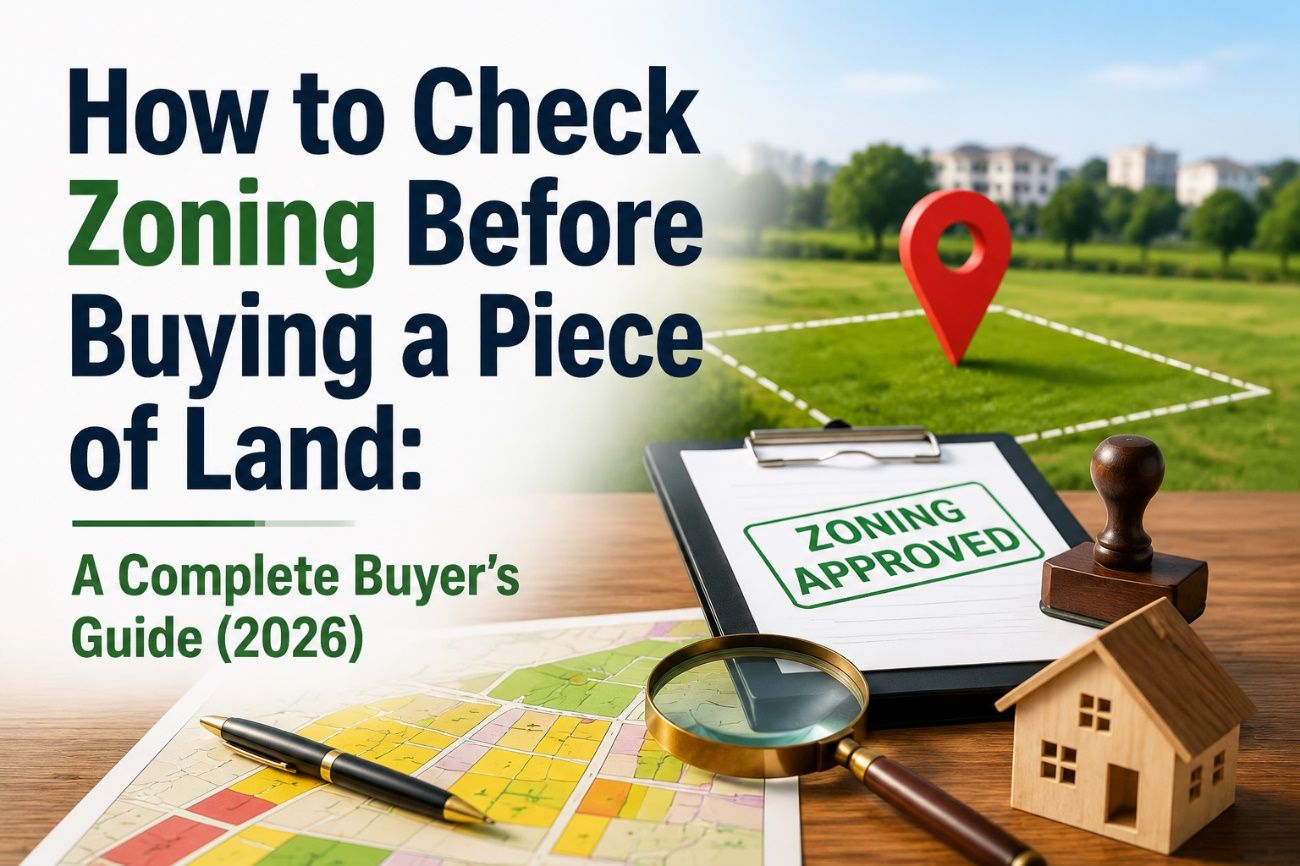
How to Check Zoning Before Buying a Piece of Land
Buying land often feels simpler than buying a house. There are no interiors to inspect, no construction quality to evaluate, and no maintenance history to review. It can look like a straightforward investment.
However, this is exactly where many buyers make an expensive mistake.
A plot may appear perfect on paper. The location looks promising, the price fits your budget, and the seller assures you that development is just around the corner. Months later, you discover that residential construction isn't permitted on that land—or that the plot falls under a restricted or agricultural zone.
At that point, changing the zoning isn't as simple as filling out a form.
That's why checking the zoning status of land should always be one of the first steps before making any payment.
Whether you're buying land to build your dream home, invest for future appreciation, or start a commercial project, understanding zoning rules can save you from legal complications, unnecessary expenses, and years of frustration.
In this, we'll explain zoning in simple terms, why it matters, how to verify it, and the practical checks every buyer should complete before signing the agreement.

What Is Land Zoning ?
Land zoning refers to the way local planning authorities classify land based on how it can legally be used.
Think of zoning as a rulebook for a city or town. It helps ensure that factories don't suddenly appear in the middle of residential neighborhoods or that hospitals and schools have appropriate locations.
Every parcel of land falls under a specific zoning category. That classification determines what can—and cannot—be built there.
Some of the most common zoning categories include:
Institutional
Mixed-use
Recreational
Public Utility
Although the names may vary slightly from one state or development authority to another, the purpose remains the same: planned and sustainable development.
Ignoring zoning regulations can lead to serious problems later, even if every other property document appears to be in order.
Why Checking Zoning Matters Before Buying Land
Many buyers assume that ownership automatically gives them the freedom to use the land however they want.
Unfortunately, that's not how it works.
You may legally own the land, but local planning regulations still control what activities are allowed on it.
Imagine purchasing a plot with plans to build a farmhouse. Everything looks fine until you apply for construction approval and learn that residential development isn't permitted in that area.
Your investment suddenly becomes much less useful than you expected.
And situations like this are more common than many first-time buyers realise.
A Real Buyer Scenario
A buyer once found what seemed like an excellent investment on the outskirts of a growing city. The seller explained that a new highway was under construction and property prices would soon rise.
The price was attractive, so the buyer moved quickly.
Only after the purchase did they learn that the land was still classified as agricultural. Residential construction required land-use conversion, additional approvals, and a lengthy administrative process.
The buyer still owned the land.
But the original plan had to be postponed indefinitely.
A simple zoning verification before purchase could have prevented months of uncertainty.
Common Types of Land Zoning in India
Different planning authorities use different development plans, but these are the categories you'll most commonly encounter.
Residential Zoning
This land is intended for housing developments.
Depending on local regulations, it may allow:
Independent houses
Villas
Apartments
Residential societies
Affordable housing projects
If you're buying land to build a home, this is generally the category you'll be looking for.
Commercial Zoning
Commercial land is designated for business activities.
Examples include:
Office buildings
Retail shops
Shopping complexes
Hotels
Restaurants
Service centres
Building a residence on commercially zoned land may not be permitted without additional approvals.
Agricultural Zoning
Agricultural land is reserved primarily for farming and related activities.
While many buyers purchase agricultural land as an investment, it's important to understand that constructing residential buildings is often restricted unless the land use is officially converted according to state regulations.
Rules differ across states, making local verification essential.
Industrial Zoning
Industrial zones support manufacturing and production activities.
Typical developments include:
Factories
Warehouses
Processing plants
Logistics facilities
These areas generally follow separate environmental and safety regulations.
Mixed-Use Zoning
Mixed-use developments are becoming increasingly common in expanding cities.
These zones allow combinations such as:
Shops on the ground floor
Offices on middle floors
Residential apartments above
They encourage walkable neighbourhoods and more efficient land use.
How to Check the Zoning of a Piece of Land
The good news is that zoning information isn't always difficult to access.
If you know where to look, verifying the land's classification becomes much easier.
Here are the steps experienced buyers typically follow.
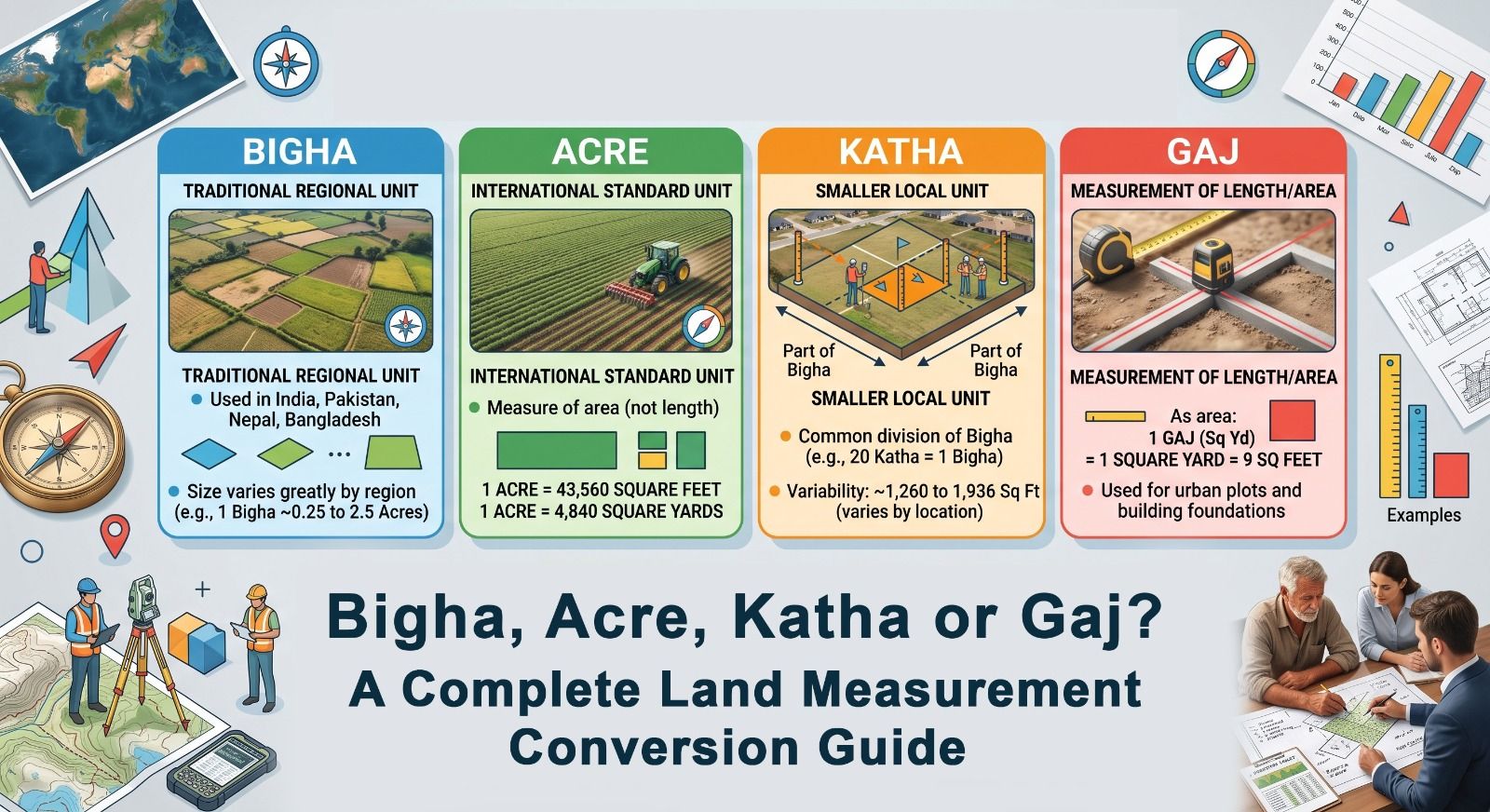
1. Ask for the Survey Number or Khasra Number
Every plot has an official land identification number.
Without it, verifying records becomes difficult.
Before discussing prices in detail, request:
Survey Number
Khasra Number
Plot Number
Revenue Record Details
These identifiers will be required when checking government records.
2. Visit the Local Development Authority
Every city or district has a planning authority responsible for land-use regulations.
Depending on your location, this could be:
Development Authority
Urban Planning Department
Town Planning Office
Municipal Corporation
Local Authority
These offices maintain the official master plan that shows how different areas are zoned.
Ask to verify whether the plot falls under:
Residential
Commercial
Agricultural
Industrial
Green Belt
Restricted Area
Never rely solely on verbal assurances from sellers or brokers.
Official records carry far more weight.
3. Check the Master Plan
One of the most useful documents available to buyers is the city's Master Plan.
It outlines future development proposals, including:
Residential sectors
Commercial corridors
Industrial zones
Proposed highways
Green spaces
Public utilities
Transportation networks
This step is often overlooked.
However, it can reveal opportunities—and potential restrictions—that aren't immediately visible during a site visit.
For example, a quiet plot today could fall within a future road widening project or a planned public infrastructure corridor.
Knowing this in advance helps you make a more informed investment decision.
A Small Observation That Experienced Buyers Often Share
Many people visit a plot on a peaceful Sunday morning and imagine what life would be like there.
Then they move in and discover that weekday traffic tells a completely different story.
The same applies to zoning.
A location may look residential today, but official planning documents—not appearances—determine what can legally happen there tomorrow.
And that matters far more than the promises made during a site visit.
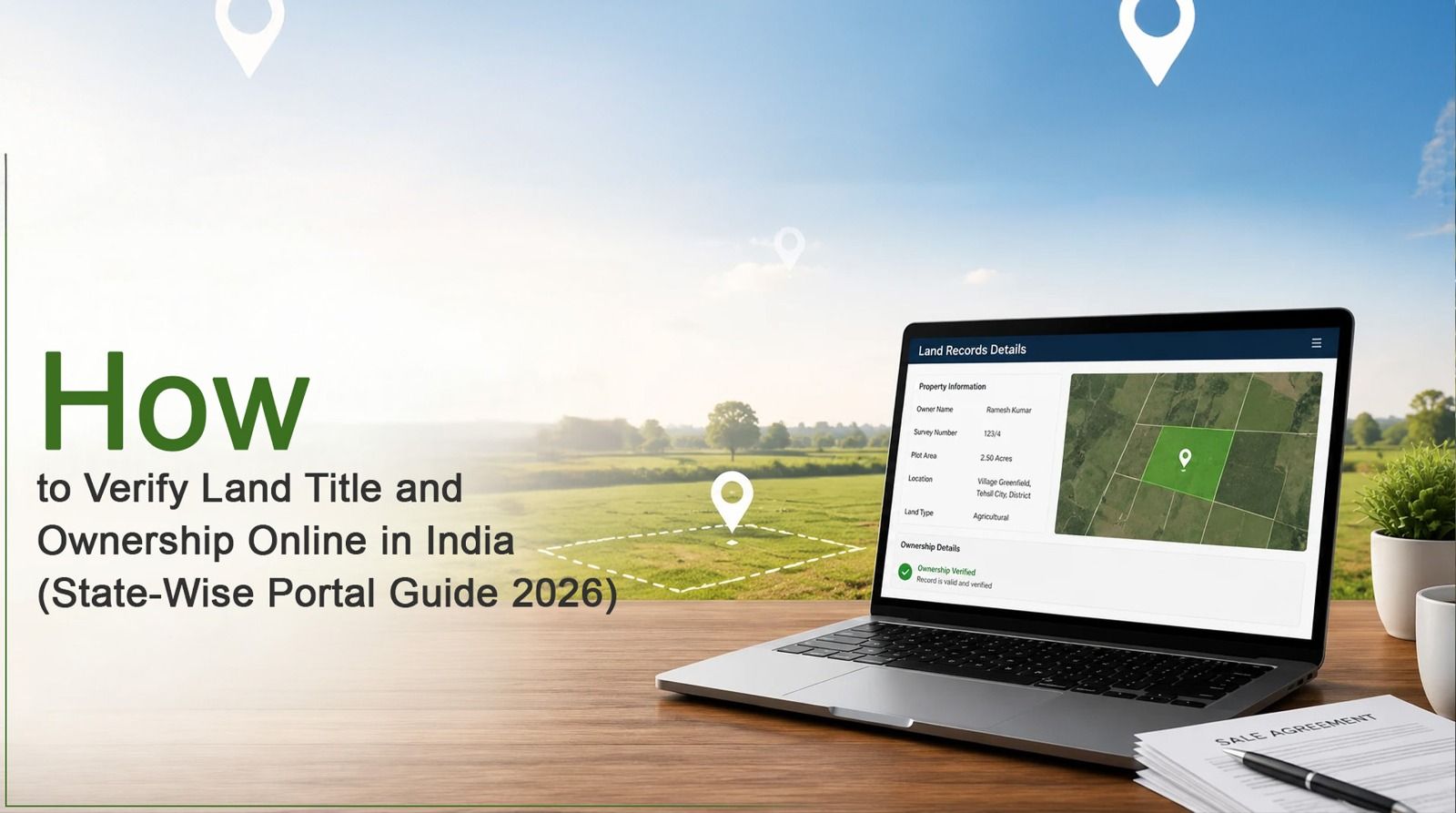
4. Verify Zoning Through Government Portals
In recent years, many states in India have digitised land records and planning information. That has made property verification much easier than it was a decade ago.
Still, don't expect every portal to work exactly the same way. Some offer interactive zoning maps, while others provide downloadable master plans or land-use notifications.
If you're buying land, spend a little time exploring the official portal of the concerned development authority. It can save you from making an expensive decision based only on someone's word.
Look for information such as:
Current land-use category
Master Plan designation
Approved layout status
Development notifications
Road widening proposals
Green belt or conservation areas
Future infrastructure projects
If the online information isn't clear, visit the planning office personally. A thirty-minute visit today is far easier than dealing with legal complications later.
5. Ask Whether the Land Has Already Been Converted
This is one of the questions many first-time buyers don't think to ask.
A plot may have originally been agricultural land. However, it might already have been converted for residential or commercial use through the proper legal process.
The important point is this:
Don't assume.
Ask for documentary proof.
If the seller claims the land has been converted, request copies of the conversion order or approval issued by the competent authority.
Always compare these documents with the revenue records.
6. Speak With Nearby Property Owners
Official documents tell one part of the story.
Local residents often tell you the rest.
Spend a little time walking around the neighbourhood. Talk to people who have lived there for several years.
You may learn things that never appear in brochures, such as:
construction restrictions
drainage problems
recurring waterlogging
disputes over access roads
proposed government acquisition
delays in development approvals
One conversation with a nearby shopkeeper or homeowner can sometimes reveal more practical information than hours of online research.
Don't Ignore Future Development Plans
A plot should never be judged only by what surrounds it today.
Instead, ask yourself a better question:
What will this area look like five or ten years from now?
Development authorities regularly update master plans to accommodate growing cities.
A peaceful open field today could become:
a residential township
a commercial corridor
an industrial cluster
a transport hub
a public utility zone
On the other hand, land that appears attractive today may later fall within a proposed road expansion or government infrastructure project.
As per recent housing demand trends in NCR, first-time buyers and investors continue to account for a significant share of bookings in emerging growth corridors. This makes future planning information just as valuable as present-day pricing.
Long-term appreciation depends as much on planned development as it does on the current location.

Red Flags You Should Never Ignore
Buying land should never feel rushed.
If any of the following situations arise, pause your decision until everything has been verified.
The seller avoids sharing documents.
Transparency builds confidence.
If important documents are delayed repeatedly, ask yourself why.
The land use doesn't match the seller's claims.
If someone says the plot is residential but government records indicate agricultural land, rely on the official records—not verbal promises.
Prices Are Unusually Low
Everyone likes finding a bargain.
However, land offered well below the surrounding market rate deserves extra investigation.
Sometimes there's a genuine reason.
Sometimes there isn't.
Development Exists, but Approvals Don't
Seeing nearby houses doesn't automatically mean every plot has residential approval.
Illegal constructions do exist.
Always verify your own plot independently.
Pressure to Make Immediate Payment
Statements like:
"Another buyer is ready."
"This offer is only valid today."
"Book now or lose the opportunity."
should encourage caution rather than urgency.
A genuine property will still be worth buying after proper verification.
Questions Every Buyer Should Ask Before Finalising the Deal
Before paying a booking amount, ask these questions:
What is the current zoning classification?
Has the land use ever been changed?
Is the conversion order available?
Which authority governs this area?
Is the layout officially approved?
Are there any acquisition notices?
Is road access legally recorded?
Are there pending legal disputes?
Can construction begin immediately after registration?
Are there any environmental restrictions?
If the answers are unclear, continue your verification before making a financial commitment.
A Small Story That Many Buyers Can Relate To
A family once shortlisted two plots.
The first looked perfect. Wide roads, attractive entrance gate and colourful marketing boards created a strong first impression.
The second plot was much simpler. There were no large advertisements. In fact, the surrounding area looked less impressive.
Instead of choosing based on appearance, they checked both master plans.
The attractive project had unresolved zoning issues.
The simpler plot was fully approved and located near a proposed educational corridor.
Five years later, schools, markets and residential projects transformed the neighbourhood.
Sometimes the smartest investment isn't the one with the biggest billboard.
It's the one backed by proper documentation.
A Practical Due Diligence Checklist
Before signing the sale deed, make sure you've completed these checks.
✔ Verify the Survey Number or Khasra Number.
✔ Confirm the zoning classification.
✔ Review the latest Master Plan.
✔ Check conversion approvals, if applicable.
✔ Verify ownership records.
✔ Inspect mutation and revenue documents.
✔ Visit the plot personally.
✔ Speak with local residents.
✔ Confirm road access.
✔ Check future infrastructure plans.
✔ Consult a qualified property lawyer if anything appears unclear.
A few extra days spent on due diligence can protect an investment worth several years of savings.

Final Thoughts
Buying land is exciting because it represents possibilities.
It could become your future home, a long-term investment or the foundation of a business.
But every successful property purchase begins with careful verification—not assumptions.
Checking zoning may feel like an extra step today. In reality, it is one of the simplest ways to avoid costly surprises tomorrow.
Take your time.
Read every document.
Verify every claim.
And never hesitate to ask questions.
Good investments are built on informed decisions, not hurried ones.
About the Author
This article has been written by the editorial team at Land2Land, where we simplify property buying and selling through practical, research-backed guides. Our goal is to help buyers, investors and landowners understand real estate with clarity, transparency and confidence. Every article is carefully reviewed to provide accurate, reader-friendly information that supports informed property decisions.
Founder's Note
A Note from the Founder
At Land2Land, we believe that every property decision should be backed by knowledge—not uncertainty. Whether you're purchasing your first plot or expanding your investment portfolio, our mission is to make reliable real estate information accessible to everyone. We hope this guide helps you take your next step with greater confidence.